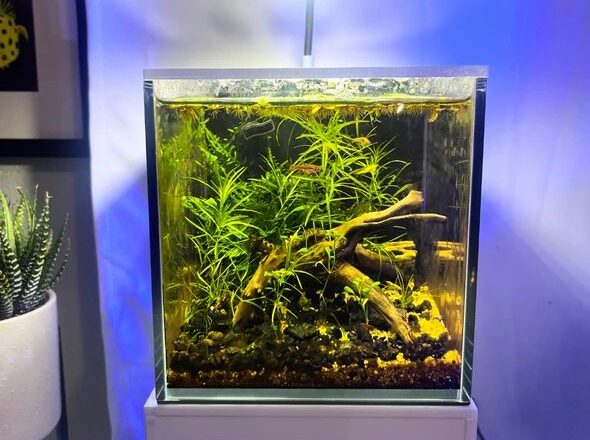
Best Nano Aquarium Kits
A nano tank looks simple from the outside: a small glass box, a light, a filter, done. In practice, kits…
Read More
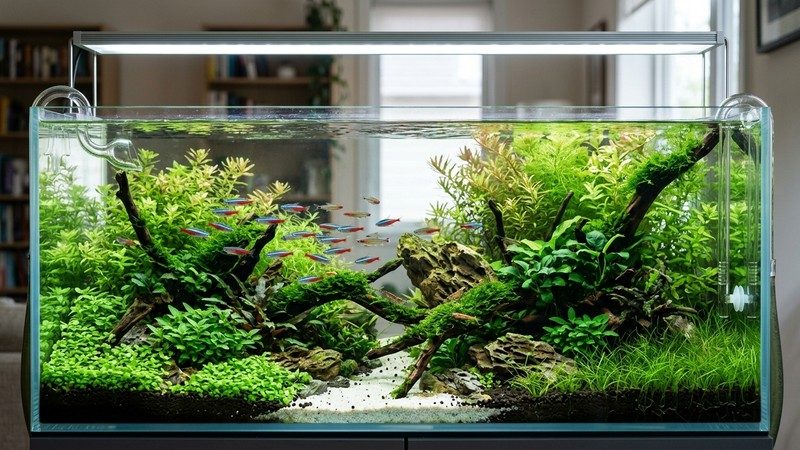
Most first aquariums fail for one simple reason. The fish arrive before the tank is ready for them. A new tank looks clean and clear, but the water is not yet safe for fish to live in.
Learning how to set up your first aquarium is mostly about order. You build the home first, let it settle, and only then bring fish home. This guide walks through that order, one step at a time.
Set up the tank, filter, heater, and substrate first. Fill it with dechlorinated water and run everything for a day. Then cycle the tank for a few weeks until ammonia and nitrite both read zero. Only after that should you add a few fish at a time.
Before you buy anything, decide which fish you want to keep. A single betta, a group of small tetras, and a pair of goldfish all need very different homes. The fish decide the tank size, the filter strength, and even the floor material.
Check the adult size of each fish, not the small size you see in the store. Young fish grow, and some grow fast. Also check whether your fish need a group, since many small species feel stressed when kept alone.
Once you know your fish, the rest of the shopping list becomes much easier. You are no longer guessing. You are building a home for known animals with known needs.
Small tanks look easy, but they are actually harder to run. A tiny volume of water changes temperature and chemistry very fast. One extra pinch of food can spoil the water in hours.
A 20-gallon tank is a kind choice for a first aquarium. It gives you more room for error, more fish choices, and more stable water. A 10-gallon tank can work for a small, light stocking plan, but it demands more care.
Place the tank on a level, purpose-built stand that can hold the full weight. Water alone weighs about 8.3 pounds per gallon, before you count glass, gravel, and rocks. Keep the tank away from direct sunlight and heating vents, since both cause swings your fish will feel.
You do not need every gadget on the shelf. A safe first setup needs a short list of basics, and each one prevents a known problem.
Kits can be a fair starting point, but check each part against your fish. A kit filter or heater may be too weak or too strong for your plan.
Work through these steps while the tank is still empty and dry. Moving a filled tank is dangerous for the glass and for your floor, so choose the final spot first.
Your tank now looks finished, but it is only built, not ready. The most important step comes next, and it happens out of sight.
Fish waste, uneaten food, and decaying plants release ammonia. Ammonia burns fish skin and gills, even at low levels. Nature solves this with bacteria, and your filter needs time to grow them.
Helpful bacteria turn ammonia into nitrite, which is also harmful. A second group then turns nitrite into nitrate, which is far safer at low levels. Growing these bacteria is called cycling, and it is the heart of a healthy tank.
The kind method is a fishless cycle. You feed the empty tank a small, controlled ammonia source, such as pure ammonia made for cycling or a pinch of fish food. No fish are exposed to the harmful stage.
Cycling usually takes about 3 to 6 weeks. Test the water as you go. The tank is ready when ammonia reads 0 ppm, nitrite reads 0 ppm, and nitrate shows a small reading above zero.
Can I speed the cycle up? A little. Warm water and good filter flow help bacteria grow, and media borrowed from a healthy tank can help too. Still, expect weeks, not days, and let the test kit make the final call.
What if ammonia stays high? Keep waiting and keep testing. A stalled reading usually means the bacteria are still growing. Do not add fish to fix the wait, because the ammonia will harm them.
When the tests say the water is safe, add only a few fish first. Each new fish adds waste, and the bacteria need time to grow and match the new load. Wait at least a week or two before adding the next small group.
Bring new fish home without shocking them. Float the sealed bag in the tank for about 15 to 20 minutes so the temperatures match. Then add small amounts of tank water to the bag over the next 20 to 30 minutes before netting the fish in gently.
Feed lightly during the first weeks. A small meal the fish finish in a couple of minutes is plenty. Extra food rots, and rotting food is the fastest way to undo your careful start.
Buying fish on the same day as the tank is the classic error. So is washing a new tank or decor with soap, which leaves poison behind. Both mistakes are easy to avoid once you know about them.
Overstocking is the quiet one. The tank looks empty, so more fish feel harmless. But every fish adds waste, and a young filter can only handle so much. Stock for the adult size and the full group, not for how the tank looks today.
Finally, do not chase perfect numbers with constant tweaks. Steady water that is close to ideal beats water that swings up and down. Fish adapt to stable conditions far better than to daily changes.
Run the equipment for at least 24 hours to check for leaks and stable temperature. After that, the tank still needs a full fishless cycle, which usually takes 3 to 6 weeks. Add fish only when ammonia and nitrite both test at 0 ppm.
A 20-gallon tank is a forgiving first choice for most beginners. It holds more water, so temperature and chemistry change more slowly than in a tiny tank. A 10-gallon tank can work for one betta or a very small group, but it needs closer attention.
Yes, a test kit is essential, not optional. Ammonia and nitrite are invisible and have no smell at harmful levels. Liquid kits that test ammonia, nitrite, nitrate, and pH give clearer readings than strips, and they tell you when the cycle is truly done.
No, same-day fish are the most common cause of early losses. A new filter has no bacteria yet, so waste builds up with nothing to remove it. Fish added to an uncycled tank face ammonia burns and severe stress. The fishless cycle protects them from that.
Add only a few fish at the start, then wait a week or two before adding more. Each group raises the waste level, and the bacteria colony needs time to grow with it. Slow stocking keeps ammonia at zero while the tank matures.
Most common tropical community fish do well around 75 to 80°F, and many keepers set the heater near 76 to 78°F. The exact target depends on your species, so check each fish before you buy. Stability matters most, so confirm the temperature with a separate thermometer.
A good first aquarium is built in the right order: plan the fish, set up the gear, cycle the water, and stock slowly. None of the steps are hard. The only real skill is patience during the weeks when the tank looks ready but is not.
When you are ready to plan your fish and gear, browse our Nano & Small Aquariums guides for small-tank ideas that suit a first setup.
A nano tank looks simple from the outside: a small glass box, a light, a filter, done. In practice, kits…
Read More